
Ollas: An Ancient Gardening Secret That Still Works Beautifully
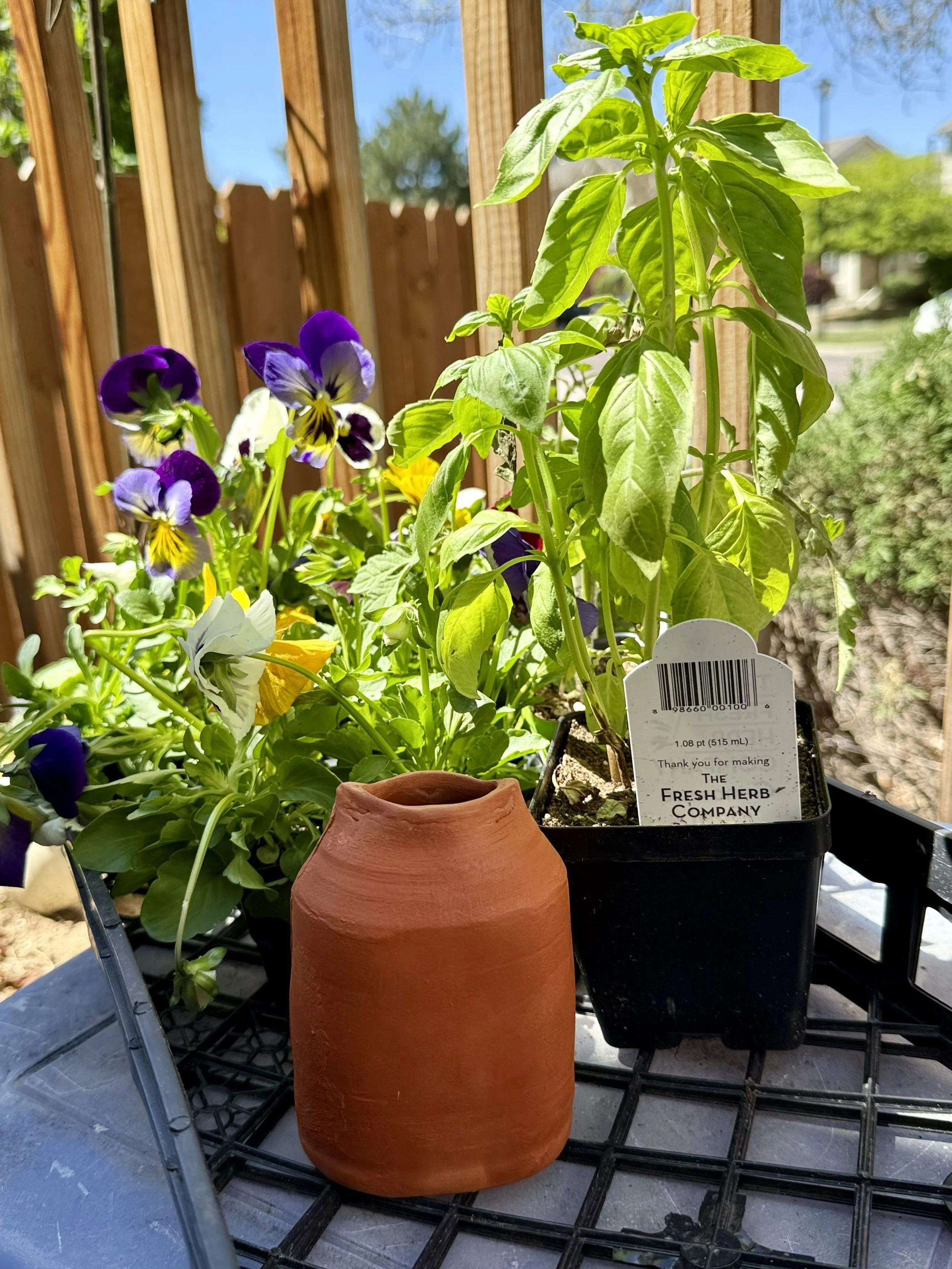
Olla waiting to be planted with some basil.
As a potter, I love it when something is both beautiful and incredibly practical—and ollas check both boxes.
If you’ve never heard of an olla (pronounced OY-yah), you’re in for a treat. The word olla is Spanish for “pot” or “cooking vessel,” but in the gardening world, an olla is a buried watering pot made from unglazed porous clay.
These humble clay pots have been helping gardeners keep plants happy for thousands of years. And this isn’t some trendy new gardening gadget. Cultures in China, North Africa, the Middle East, ancient Roman regions, and Indigenous communities in the Americas have used this method for generations—because it simply works.
So how does an olla work?
It’s beautifully simple.
You bury the body of the pot underground near your plants, leaving the neck above the soil line, and cover the opening with a lid.
Then you fill it with water.
That’s it.
The porous clay slowly releases moisture into the surrounding soil as the soil dries out. If the soil is already moist, less water escapes. If things are getting dry, the pot releases more.
Pretty clever, right?
This happens through soil moisture tension/capillary action, making ollas surprisingly efficient. And, it means your plants get water where they actually need it—right at the roots.
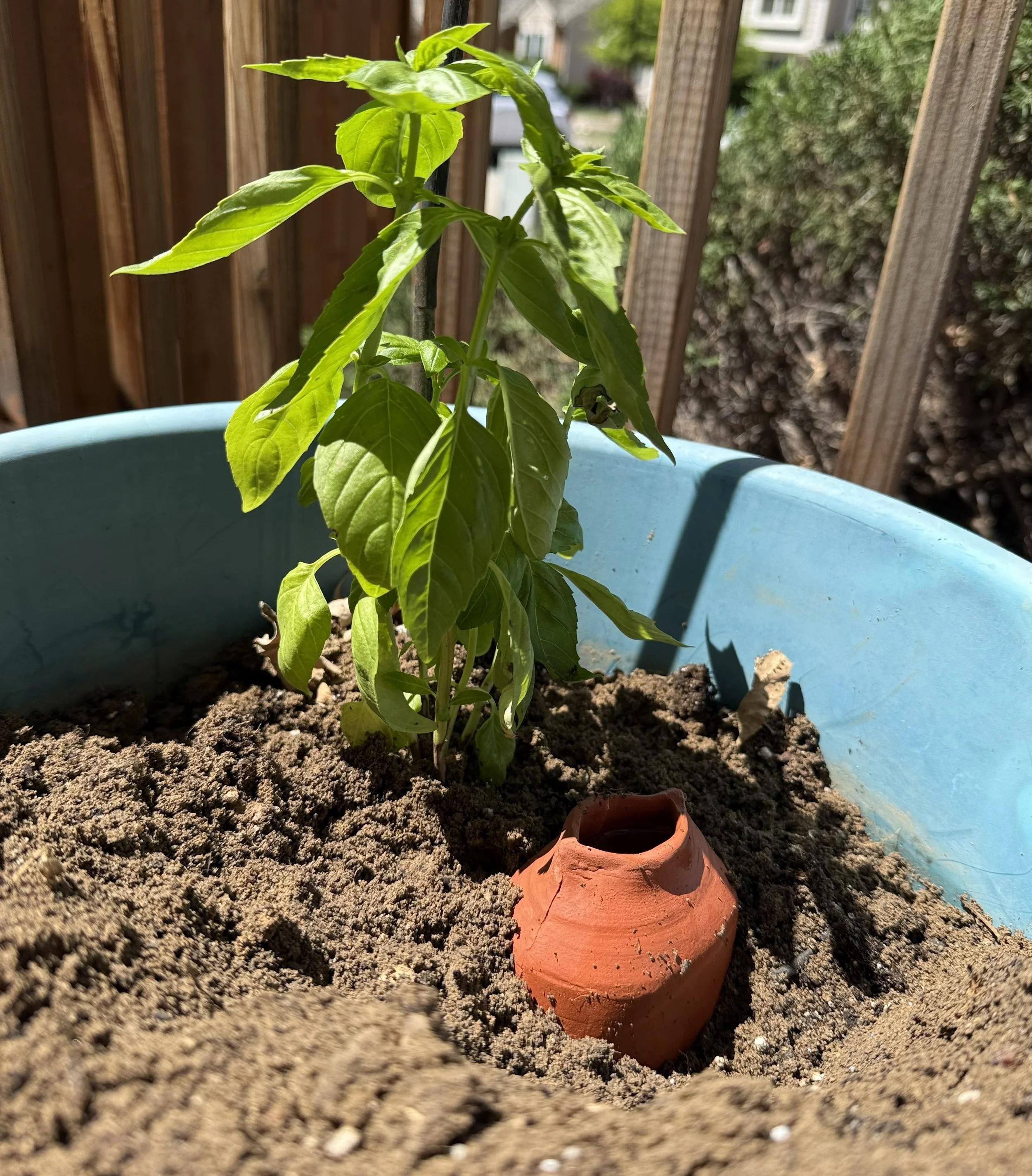
My favorite part!
I don’t have to water every day. This one didn’t need to be refilled for four days. Maybe my basil plant will survive longer than a couple weeks.
Why gardeners love ollas
There’s a lot to love here.
They save water
Because the water goes underground directly to the root zone:
very little evaporates
there’s almost no runoff
you’re not wasting water spraying paths, leaves, or weeds
Depending on your climate and setup, gardeners often report using 50–70% less water.
That’s huge.
They encourage stronger roots
Instead of plants hanging around at the soil surface waiting for a quick sprinkle, they grow roots deeper in search of moisture.
That means:
healthier root systems
stronger plants
better drought tolerance
Fewer weeds
If you’ve ever watered a garden bed only to feel like you’ve mostly hydrated the weeds… same.
Because the soil surface stays drier with ollas, fewer weed seeds get the invitation to sprout.
Less plant disease
Wet leaves can invite fungal problems, mildew, and other garden annoyances.
Ollas water from below, so leaves stay dry and happier.
Less daily watering
This might be my favorite part.
Instead of dragging out the hose every day in summer, you may only need to refill every few days depending on the weather, your plants, and the size of your olla.
What grows well with ollas?
So many things!
They’re especially wonderful for:
🌿 tomatoes
🌶 peppers
🥒 squash
🥬 lettuce
🥬 kale
🍆 eggplant
🌱 herbs
🌼 flower beds
🪴 raised beds
🌵 drought-tolerant plantings
They’re especially handy if you’re trying to garden more efficiently or if summer watering feels like a full-time job.
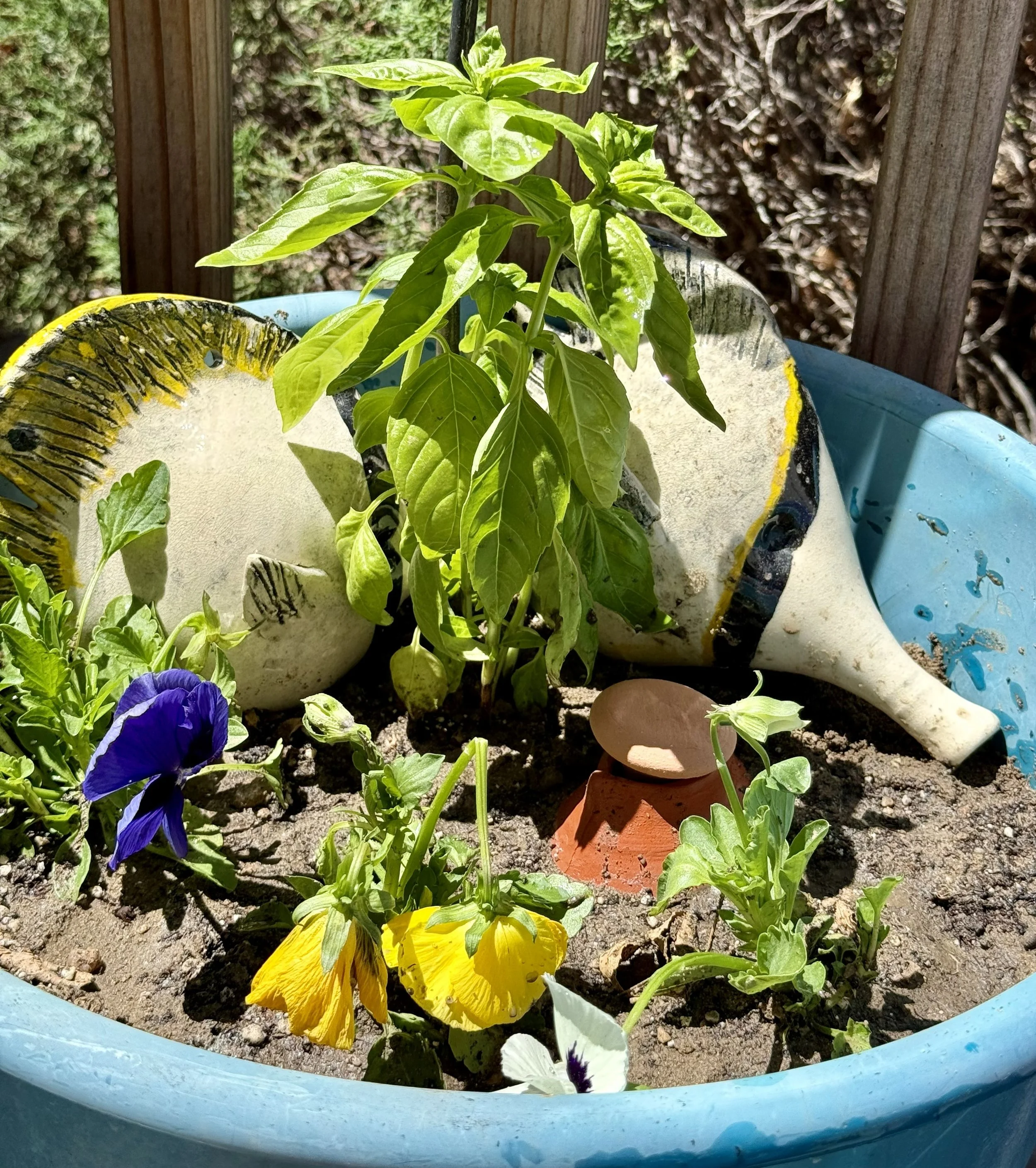
Basil and Pansies
The olla is buried to its shoulder with a topper to keep out most of the dirt. I think I need one for my tomato plant!
Why I love them as a ceramic artist
I have to admit—there’s something deeply satisfying about a piece of pottery doing exactly what clay has done for centuries: serving a useful purpose beautifully.
An olla doesn’t need to be flashy. It just needs to quietly do its job well.
But of course… if it also happens to be beautiful in the garden? Even better.
If you’re looking for a simple, time-tested way to keep your plants happy while using less water, handmade ollas might be just the thing.
I’ve been creating my own ceramic ollas for the garden this season, combining practicality with the same handmade character I love bringing to all of my pottery. And, hoping to keep my basil and tomato plants alive for the summer.
If you’d like to see what I’ve made, you can take a peek at my current collection at Curate: A Local Mercantile. I’d love for one of these hardworking garden helpers to find a home in your garden.